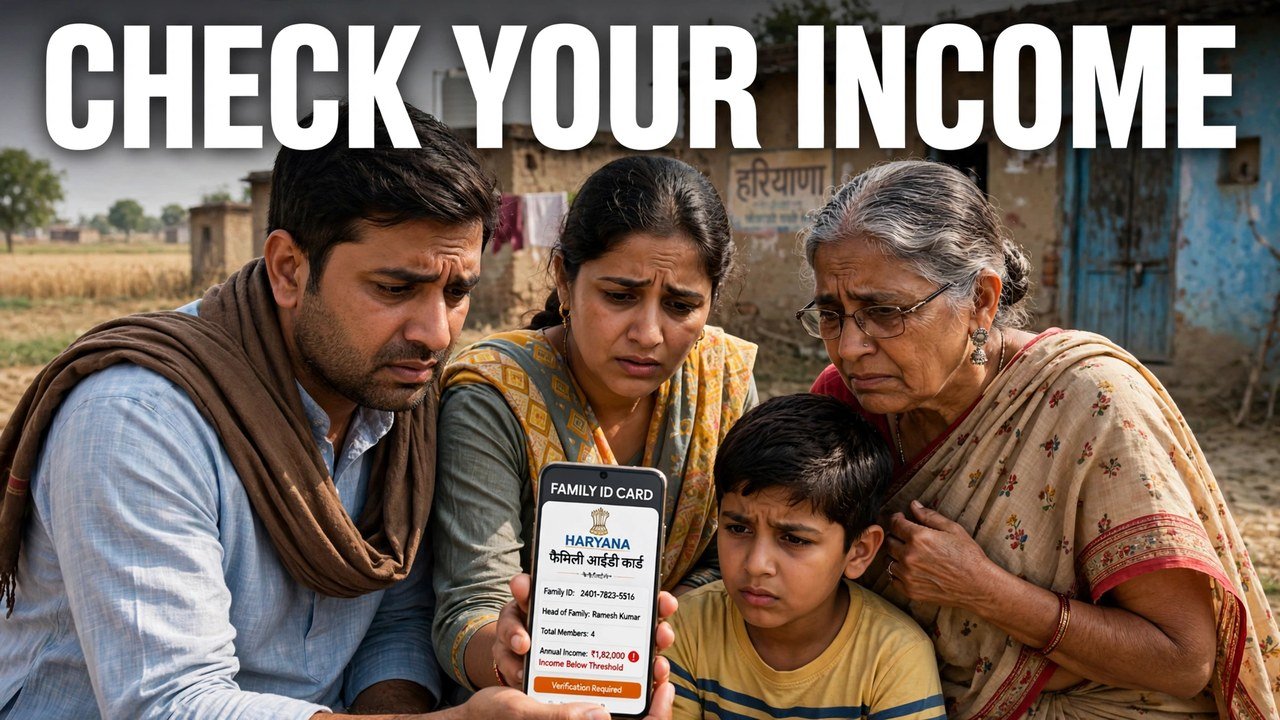
Wrong Income in Family ID Can Affect Your BPL Status: How to Check Your Income
Your BPL status does not follow the income you remember declaring — it follows the verified income stored in your Family ID. In Haryana, BPL and AAY ration cards are generated automatically from the Parivar Pehchan Patra database for families whose annual income meets the criteria of up to Rs 1.80 lakh. So the quickest way to understand your BPL position is a three-part check: read the verified income line in your PPP record, compare that one figure with Rs 1.80 lakh, and then cross-check what the EPDS portal shows for your ration card.
If the verified figure in PPP is wrongly above Rs 1.80 lakh, the automatic system will treat your family as outside the BPL criteria even when your real income is lower. Checking the figure first tells you whether you have a BPL problem at all — and if you do, exactly which number is causing it.
The Figure That Counts Is the Verified One, Not the One You Declared
When a family enrols in PPP, it declares its income. That declared figure is then verified, and it is the result of that verification — the verified income — that sits in the record and is used further.
The Haryana Legislative Assembly reply on PPP explains how that verified figure is produced. The declared income is checked against online data from several official sources, among them tax-return data, government employee and pensioner records, contractual employee data, labour-wage data, payments to farmers for crop procurement, and annual electricity consumption. It is also assessed by Local Committees of five members, each assessing independently.
This matters for your check because a family can be honestly below Rs 1.80 lakh in real life and still carry a verified figure above it, if one of those checks has pushed the assessed income up. Your BPL status follows the stored figure, so the stored figure is the one to inspect.
Check 1 — Read the Income Line in Your Family ID Record
You can view the income recorded against your Family ID on the Mera Parivar portal. For the full checking method, see our step-by-step guide: How to Check Income in Family ID Online.
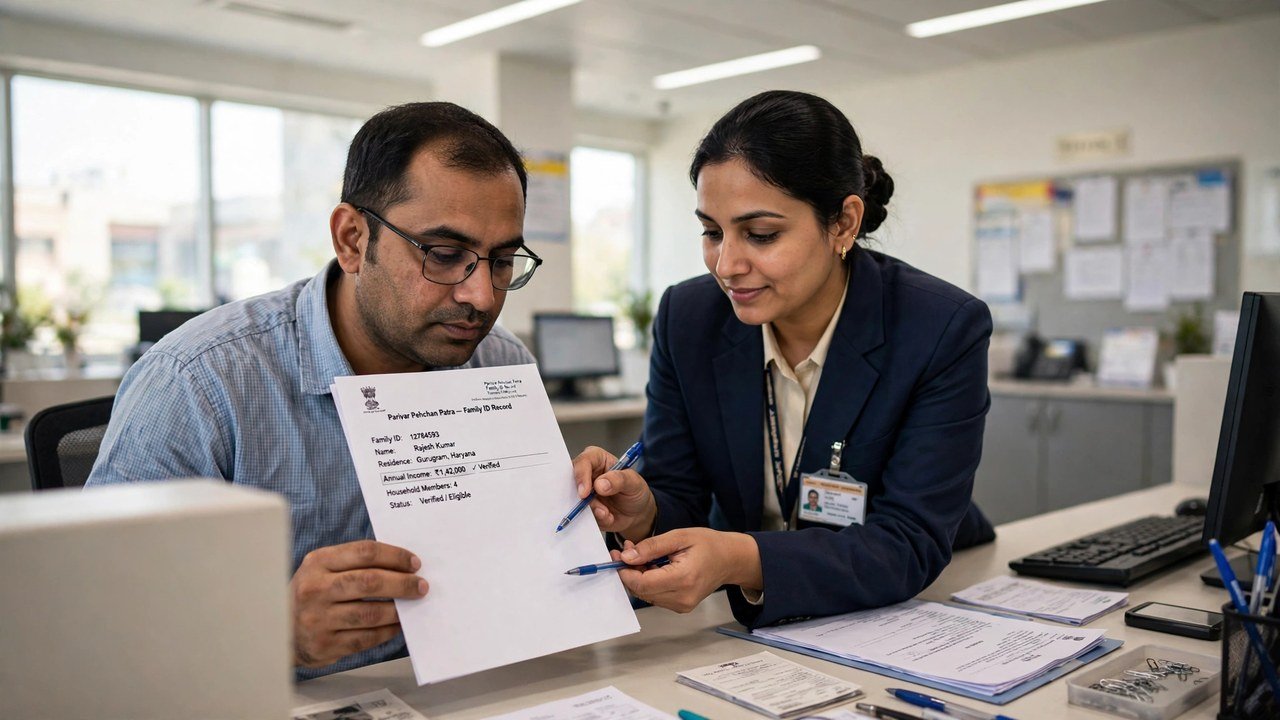
Check 2 — Compare That One Figure With the Rs 1.80 Lakh Line
Now place the figure you noted next to a single number: Rs 1.80 lakh per year.
- Verified income up to Rs 1.80 lakh: on income grounds, your family meets the criteria the government has stated for automatic BPL/AAY card generation from PPP data. If no card shows, the cause is likely somewhere else in the record, not the income line.
- Verified income above Rs 1.80 lakh: on the record as it stands, the automatic system reads your family as outside the BPL criteria, whatever your real income is. This is the pattern behind many “our name is not in the BPL list” complaints.
- Income still pending verification: your BPL position is not settled by a final figure yet. Pending is a stage in the checking process, not a rejection.
This comparison takes less than a minute, but it separates three very different situations that families often mix up — and each one needs a different next step.
Check 3 — Cross-Check What EPDS Shows for Your Card
The third check looks at the ration side of the same record. Search your ration card on the official EPDS Haryana portal using your Family ID.
Read the result together with Check 2:
- If EPDS shows a BPL or AAY card and your verified income is up to Rs 1.80 lakh, the two records agree — your BPL status is standing as the criteria provide.
- If EPDS shows no BPL/AAY card, or a different card type, and your verified income is above Rs 1.80 lakh, the two records also agree — but they agree on the wrong income. The income record is where the problem sits.
- If EPDS shows no card while your verified income is already up to Rs 1.80 lakh, look beyond income: check that the member list in your Family ID is complete and that the record’s verification is finished, because automatic generation reads the whole record.
Keeping a note of the EPDS result next to the PPP income figure gives you a clear, dated picture of your BPL status on the day you checked.
If the Income Line Is Wrong, Note It Exactly Before You Act
Do not try to edit a verified income figure directly — the official PPP citizen information states that a field which has completed verification cannot be edited. A wrong verified income is contested through the designated Correction or Grievance mechanisms, and a challenge to income assessed by a Local Committee goes to a higher Sector Committee. Our guide to applying for income correction online explains that filing in full, so this article stays with the check itself: declared income, verified income as shown, the Rs 1.80 lakh comparison, and the EPDS result — those four notes are what any correction case will need.
Source: Haryana Legislative Assembly reply on Parivar Pehchan Patra, Starred Question No. 4 (February 2023); Government of India, Rajya Sabha reply on food distribution conveying the Haryana Government position on automatic BPL/AAY ration cards through PPP (February 2024); Mera Parivar / PPP portal official citizen information, Government of Haryana; and EPDS Haryana, Food, Civil Supplies and Consumer Affairs Department, Government of Haryana.
Also read: BPL ration card not made yet — check this income detail
Conclusion
Checking your BPL position starts with one line in one record. Read the verified income in your Family ID, compare it with the Rs 1.80 lakh annual criteria used for automatic BPL/AAY card generation from PPP data, and cross-check the card EPDS shows for the same Family ID. If the verified figure is above the line while your real income is below it, you have found the cause — the BPL system is following a wrong stored figure, and the exact figure you noted is the starting point for contesting it through Correction or Grievance.
FAQs
1. Which income decides my BPL status — the one I declared or the verified one?
The verified one. The income a family declares in PPP is verified through online data checks and Local Committee assessment, and BPL/AAY cards are generated automatically from the PPP database using the income on record against the criteria of up to Rs 1.80 lakh a year.
2. My real income is below Rs 1.80 lakh, but the Family ID shows more. Am I in the BPL list or not?
On the record as it stands, no — the automatic system reads the stored verified figure, and a figure above Rs 1.80 lakh places the family outside the stated BPL criteria. Note the exact figure shown; contesting that verified income is the route described in our income correction guide.
3. My verified income is below Rs 1.80 lakh and EPDS still shows no BPL card. Is the income check useless?
No — it has ruled income out, which is valuable. Next, check the member list in your Family ID and whether the record’s verification is complete, because automatic card generation reads the whole PPP record, not the income line alone.
4. My income still shows as pending verification. What does that mean for BPL?
It means no final verified figure has been recorded yet, so the BPL position based on income is not settled. Pending verification is a stage in the process; it is not the same as being found above the limit.
5. Can checking EPDS alone tell me my BPL status without looking at PPP?
EPDS shows the result — the card type recorded for your Family ID — but not the reason behind it. Only the PPP record shows the verified income that produced that result, which is why the two checks belong together.
