How to Split a Family ID: Things to Check Before Creating a Separate Family
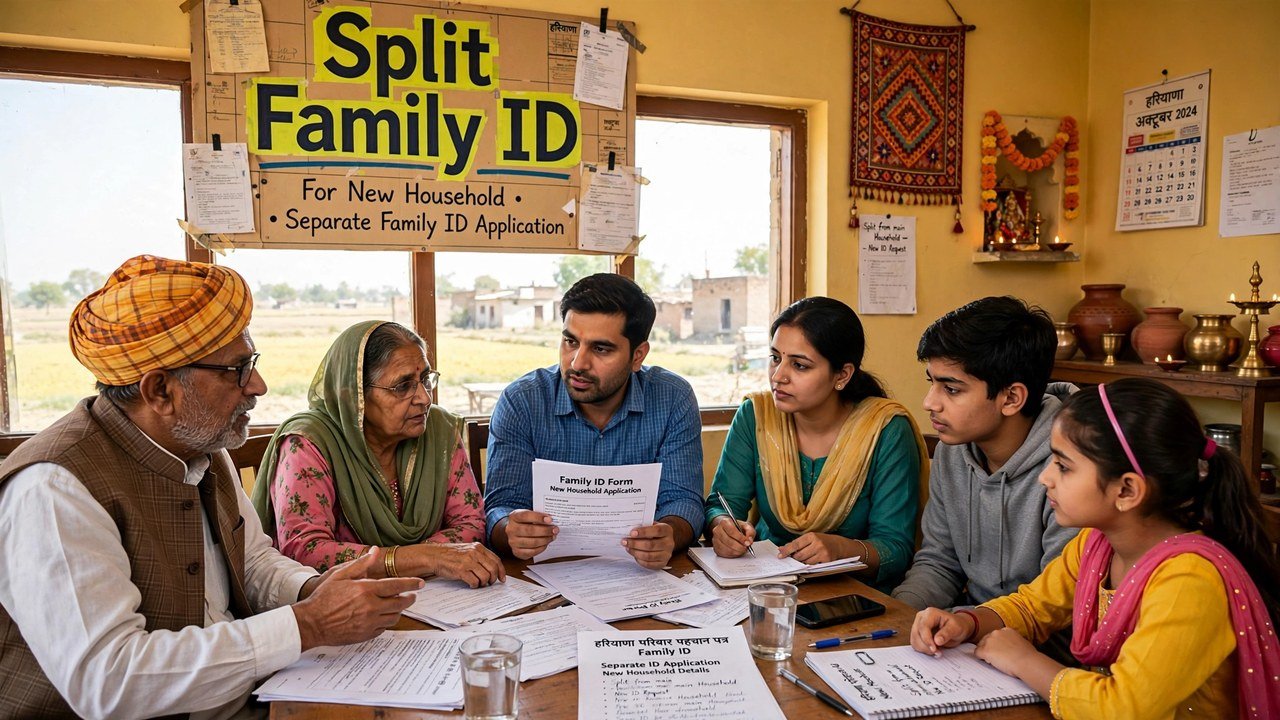
Splitting a Family ID in Haryana does not mean cutting one card into two on the portal. PPP keeps one 8-digit Family ID for one family, so a separate family needs its own family record: decide first who will be Head of Family of the new household, exactly which members will move out of the present record into the new one, and which members stay. Only when those three answers are written down should you go to a CSC, SARAL Kendra or PPP Operator for the new family’s enrolment and the matching change in the old record. Starting without that list is how members end up in both records, or in neither.
Most split requests come from a household that has genuinely become two — for example, a son’s household now living and running separately under the same roof or nearby. The record should follow that real change, not create it on paper alone.
What a Separate Family Actually Means in PPP
The official description is consistent on this point: a Family ID belongs to a family as a unit, and the members holding a common Parivar Pehchan number are that family in the record. NIC Haryana describes the same design as one unique 8-digit ID for a household, unifying all its members under a single record.
So a split has two sides, even though families talk about it as one job. One side is a new family record, with its own head and its own member list. The other side is the old record becoming smaller and still accurate, with only the members who stay. If only the new record is created and the old list is never corrected, the same people sit in two families at once — the duplication the system is built to prevent. Duplicate IDs made by mistake are a different problem, covered separately on this site.
There is also a residence point to settle before you apply. Under the Haryana Parivar Pehchan Act, 2021, a resident for PPP purposes is a family residing in Haryana, and the official enrolment description gives the permanent 8-digit ID to families residing in the state, with a temporary 9-digit T ID for families living outside it. A new household that will live outside Haryana is therefore not the same case as a new household living in Haryana — state that clearly at the counter instead of assuming both get a permanent ID.
Check One: Name the Head of the New Family First
Every family record runs through its Head of Family. In the self-service flow, authentication is by an OTP sent to the mobile number of the Head of Family stored in PPP, and enrolment is done in the head’s name. The new family will work the same way from its first day.
So choose the new head before anyone visits a counter, and check three practical things about that person: their Aadhaar details are correct, they have a working mobile number that will be stored for that family’s OTP, and they are present for enrolment and for the signed declaration that completes PPP work. Changing the head later because the first choice was made in a hurry turns one planned job into two.
Write the new head’s name at the top of your preparation note. Every other decision in this article hangs below it.
Check Two: Draw the Two Member Lists on Paper
Do not rely on memory for who moves. Open the present family’s member list first — how to open and read that list is covered on this site — and write two lists from what you see on screen.
List A is who stays in the present Family ID, starting with its present head. List B is who moves to the separate family, starting with the new head you chose above. Together, the two lists should contain every name on the present record exactly once: no name on both lists, and no name left off both.
Pay special attention to members whose own records depend on the family picture — a pensioner, a student, or a child whose details were recently added. You are not deciding their benefits in this step; you are making sure the move list is complete, so nobody discovers months later that they were silently left in the wrong household or dropped from the household they actually live in.
Check Three: Fix Wrong Details Before, Not During, the Split
A split copies attention, not errors — but it can carry an error into a second record if you let it. The official CRID description notes that a field once verified cannot simply be edited in the self-update flow, so a wrong spelling, date of birth or other verified detail in the present record should be raised through the official Correction or Grievance route, the designated mechanisms for contesting PPP records, rather than hoping the new enrolment will quietly fix it.
The short rule is: correct a wrong detail in the record where it already sits, then split with clean details. Trying to do both in one visit, with two lists and a correction on top, is where names get mismatched between the old and new records.
What to Carry for This Job Specifically
Keep the bundle narrow and tied to the two lists, not the full enrolment file for a family that already exists.
Carry the present 8-digit Family ID number, the Aadhaar of the present Head of Family and of the chosen head of the new family, the Aadhaar of every member on List B, and the working mobile number that will serve the new family. Carry your two handwritten lists as well — at a busy counter, that one page prevents the operator from having to guess who moves and who stays.
Aadhaar is the mandatory member document in the official PPP documents list. Beyond that, provide any supporting document the counter asks for in your specific case, and do not invent a document rule of your own: no official source checked for this article names a single mandatory split document, a split fee or a fixed number of days for a split to complete, and this article does not claim one.
Where the Separate Family Is Created
New enrolment in PPP is an official, assisted process. The official description places enrolment with CSC, SARAL Kendra and PPP Operators, and also allows family information to be updated or verified at an Atal Seva Kendra or SARAL Kendra. Enrolment through these official channels is described with no fee.
At the counter, state the request in the terms of your preparation: a separate family is to be created for the members on List B, headed by the new head you have named, and the present family’s record is to end up showing only List A. Read both outcomes back before you leave — the new family’s member list if it is shown or printed, and what was recorded for the old family. If the counter can complete only one side that day, note exactly which side remains pending and finish that side before treating the split as done; a half-finished split is a duplicate record in waiting.
Do not pay an unofficial agent to create a second ID from home, and never share either head’s OTP with a caller. A second ID created outside the official channels is not a split — it is a duplicate.
After the Split: Prove It With Two Lists, Not One
A split is finished only when both records read correctly, so the final check is also two-sided. Open or obtain the member list of the new family and confirm every List B name is there, correctly spelt, under the new head. Then re-check the present family’s list and confirm only List A remains.
Keep the new family’s printed PPP from its Print PPP view with the new head, and note the new 8-digit number separately from the old one — future OTPs, corrections and scheme work for each household will run through its own head and its own number from now on. If either list is wrong, raise it promptly through the official Correction or Grievance route for the record that is wrong, naming the exact member affected.
Source: Haryana Parivar Pehchan Authority / Mera Parivar portal, Government of Haryana; Citizen Resource Information Department, Government of Haryana — About Parivar Pehchan Patra and PPP Services Grievance Redressal Help Guide v3.0; Haryana Parivar Pehchan Act, 2021; and National Informatics Centre, Haryana (Government of India) official page on Parivar Pehchan Patra (October 2024).
Conclusion
A good split is decided at home and executed at a counter, in that order. Because PPP gives one family one 8-digit ID, creating a separate family means creating a new record — so first name its Head of Family, then draw the two member lists so every present member is accounted for exactly once, and correct any wrong verified detail in the old record before you move anyone. Carry the two heads’ and the moving members’ Aadhaar, the present Family ID and your lists to a CSC, SARAL Kendra or PPP Operator, state both sides of the job plainly, and finish by checking both member lists — the new family complete, and the old family showing only those who stayed.
FAQs
1. Is there a Split button on the Mera Parivar portal that divides one Family ID into two?
No split button is described in the official portal flow checked for this article. That flow works on one family’s record through Update Family Details, authenticated by that family’s Head of Family OTP. A separate family is created through official enrolment — CSC, SARAL Kendra or PPP Operator — with the old record corrected to match, which is why the preparation checks in this article come first.
2. Who should be Head of Family of the separate family?
The adult who actually heads the new household. That person’s Aadhaar and mobile anchor the new record — the OTP for that family will go to the Head of Family mobile stored in PPP — so choose someone who will be present at enrolment and available for future verification, not simply the eldest name available.
3. Can the same member stay in both the old and the new Family ID during the change?
No — that is duplication, not a transition the record is meant to hold. Draw the two lists so each member appears in exactly one family, complete both sides of the job close together, and then verify both member lists. If one side is delayed, note which side is pending and finish it before relying on either record.
4. Will the new family also get an 8-digit Family ID?
A family residing in Haryana is enrolled with a permanent 8-digit Family ID under the official description; families living outside Haryana are given a temporary 9-digit T ID. Tell the counter clearly where the new household will reside so the new record is created in the right category.
5. Is there a fee or a fixed time for a Family ID split?
No split-specific fee or fixed completion time is stated in the official sources checked for this article, and enrolment through CSC, SARAL Kendra and PPP Operators is described with no fee for enrolment. Do not pay an unofficial charge for a split, and judge completion by the two corrected member lists, not by a promised number of days.
